About
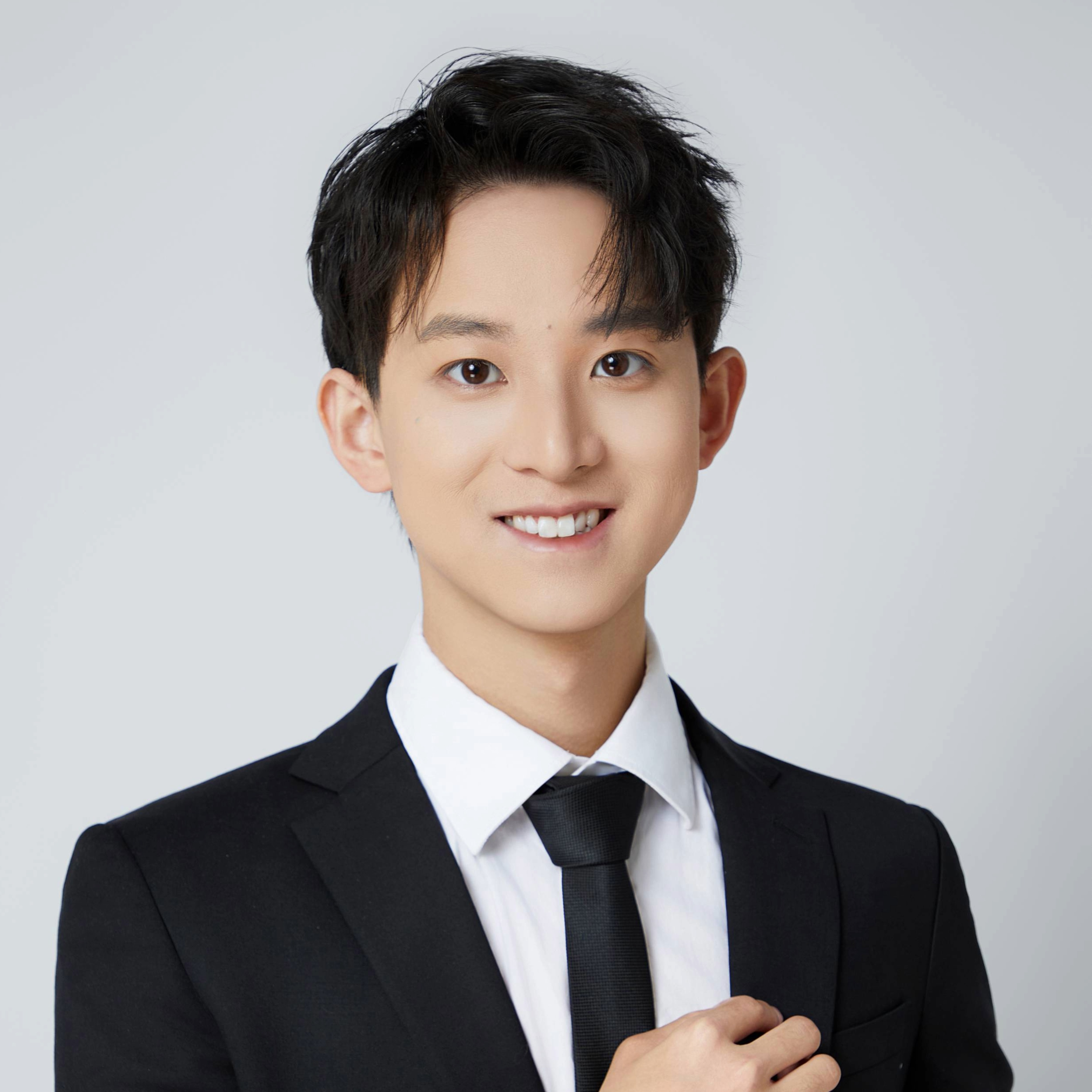
I am Hao Liang (梁昊), a Ph.D. candidate at Center for Data Science, Peking University, jointly affiliated with Zhongguancun Academy, and the co-founder of an AI data company. I am a two-time recipient of the President’s Scholarship at Peking University and received the National Scholarship in 2026. I am fortunate to be supervised by Prof. Wentao Zhang and Prof. Bin Dong, and to work closely with Prof. Bin Cui and Prof. Weinan E.
Prior to this, I received my bachelor’s degree from Beijing Institute of Technology, where I was awarded the Xu Teli Scholarship (the highest honor of BIT) and the National Scholarship. I also visited the University of Oxford, working with Prof. Ismail Ilkan Ceylan and Prof. Michael Bronstein.
Research impact: Google Scholar · 1,303+ citations · h-index 18 (as of September 30, 2026)
Competition highlights: 🥇 GOAI 2026 Agent Infra Track — Champion · 🥇 ICML 2025 SeePhys Challenge — 1st Place · 🥇 BAAI LIC Challenge 2025, Track 2 — First Prize
Let’s Connect
Who I'd like to meet
- AI data & model trainingResearchers and engineers working on post-training and agents
- Model & product teamsFoundation-model companies, agent teams, and enterprise AI leaders
- AI foundersBuilders navigating ToB adoption, commercialization, and team growth
- Future researchersStudents interested in PKU-DCAI Lab internships or graduate study
What we can discuss
- Data flywheelsGeneration, selection, verification, and closed-loop training
- Building an AI data companyProducts, enterprise delivery, and commercialization
- Open-source systemsDataFlow, DataFlex, DataMind, and the ideas behind them
- PKU-DCAI LabResearch internships and graduate study opportunities
If you are working on AI data, large models, or agents—or are interested in PKU-DCAI Lab—let's connect. I hope to meet people with whom I can exchange ideas, build things, and collaborate over the long term.
News
- Sep. 2026 We won the Agent Infra Track Championship in the GOAI Global Open-source AI Challenge!
- Sep. 2026 Honored to receive the National Scholarship.
- Sep. 2026 Our OmniEdu paper ranked #1 on the Hugging Face Daily Papers leaderboard.
- Sep. 2026 Our DataFlex-RL paper ranked #2 on the Hugging Face Daily Papers leaderboard.
- Jul. 2026 Our K12-KGraph project won Second Prize in the MinerU Frontier Corpus & Data Intelligence Challenge — AGI4S Frontier Corpus Track.
- Jul. 2026 Our K12-KGraph paper ranked #2 on the Hugging Face Daily Papers leaderboard.
- Jul. 2026 Our DataFlow-Harness paper ranked #2 on the Hugging Face Daily Papers leaderboard.
- May. 2026 Our DataPrep-Bench paper ranked #1 on the Hugging Face Daily Papers leaderboard.
- May. 2026 Honored to receive the 2026 President’s Scholarship at Peking University for the second consecutive year.
- Apr. 2026 Our DataFlex Technical Report ranked #1 on the Hugging Face Daily Papers leaderboard for that day.
- Dec. 2025 Our DataFlow Technical Report ranked #1 on the Hugging Face Daily and Weekly Paper Charts!
- Sep. 2025 We won 1st place in the ICML 2025 SeePhys Challenge!
- Aug. 2025 We won first prize in the BAAI LIC Challenge 2025, Track 2!
- Jun. 2025 Honored to receive the President’s Scholarship at Peking University.
Research Interests
My research connects data, models, and real-world systems across four directions. For broader context, see our surveys from text-centric and multimodal perspectives.
Data Attribution & Data–Model Interaction
Primary focusUnderstanding how individual data shapes model behavior, then closing the training loop through dynamic selection, mixture, and reweighting.
Data Self-Evolution
Building feedback-driven loops in which models and agents continuously generate, evaluate, select, refine, and reuse data as capabilities evolve.
Data Infrastructure
Scalable infrastructure across the full data lifecycle—from preparation and training-time adaptation to inference-time knowledge access.
Domain Data: Datasets & Benchmarks
Constructing effective, verifiable datasets and evaluation protocols for mathematics, Lean, workplace tasks, coding, and other high-value domains.
10+ first/co-first-author papers at CCF-A venues · Sa Shixuan Best Student Paper Award at NDBC
Open-Source Contributions

Generate, Clean, and Prepare LLM Data, All-in-One. An operator-based framework for data synthesis, cleaning, evaluation, and cross-domain workflow automation.

Data Select · Mix · Reweight—right in the LLM training loop. A data-centric dynamic training framework built on LLaMA-Factory.

Store at inference time. Retrieve with evidence. A shared data plane for agents spanning RAG, databases, knowledge graphs, Skills, and durable Memory.

Contributed to the data module design of the unified large-model fine-tuning framework.

Integrated DataFlow into CAMEL's data pipeline for agent-driven data workflows.
Honors & Awards
GOAI 2026 Agent Infra Track — Champion
Global Open-source AI Challenge
National Scholarship
Peking University
President's Scholarship
Peking University · Second consecutive year
K12-KGraph — Second Prize
MinerU Frontier Corpus & Data Intelligence Challenge · AGI4S Frontier Corpus Track
President's Scholarship
Peking University
ICML 2025 SeePhys Challenge — 1st Place
Multimodal scientific reasoning competition
BAAI LIC Challenge 2025, Track 2 — First Prize
Beijing Academy of Artificial Intelligence
Industrial Bank Scholarship (兴业奖学金)
Peking University
Sa Shixuan Best Student Paper Award (萨师煊优秀学生论文奖)
NDBC
Xu Teli Scholarship (徐特立奖学金)
Beijing Institute of Technology · Highest Honor
National Scholarship
Beijing Institute of Technology